
EYLEA HD Patients Were Immediately Extended Following 3 Initial Monthly Injections1,2
- Randomized, multicenter, double-masked, phase 3, head-to-head clinical trial in treatment-naïve patients with Wet AMD (n=1009)
- Patients had a mean age of 74.5 years (range: 50-96) and a mean visual acuity of ≈60 ETDRS letters (≈20/63 Snellen equivalent) at baseline (range: 24-78)
- Patients were randomly assigned in a 1:1:1 ratio to 1 of 3 treatment groups:

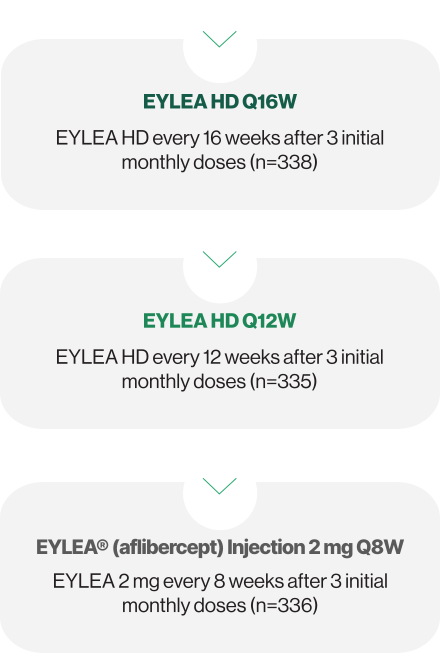
- The primary endpoint was the mean change from baseline in BCVA (ETDRS letters) at week 48 for the EYLEA HD Q16W and Q12W groups vs EYLEA 2 mg Q8W, with a noninferiority margin of 4 letters
- In the EYLEA HD groups:
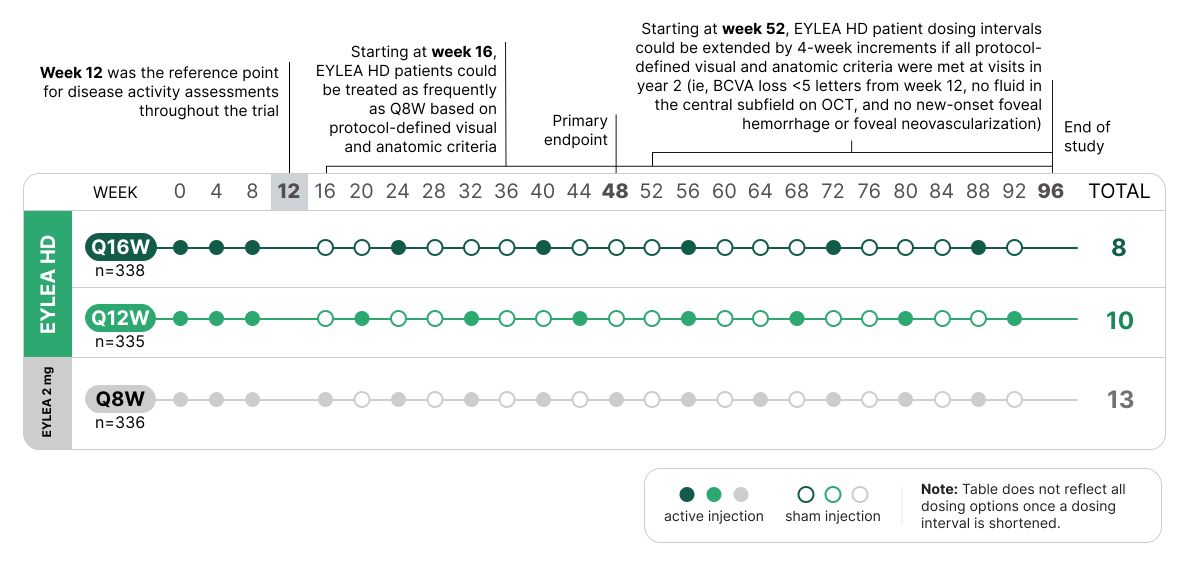
- Patients could be treated as frequently as Q8W based on protocol-defined visual and anatomic criteria, starting at week 16
- Starting at week 52, patient dosing intervals could be extended by 4-week increments if all protocol-defined visual and anatomic criteria were met at visits in year 2 (ie, BCVA loss <5 letters from week 12, no fluid in the central subfield on OCT, and no new-onset foveal hemorrhage or foveal neovascularization)
Planned Dosing Schedules Through Week 961-4
EYLEA HD patients had multiple opportunities for interval shortening, or extension in year 2, if DRM criteria were met

Dose Regimen Modification (DRM) Criteria in the EYLEA HD Treatment Groups4
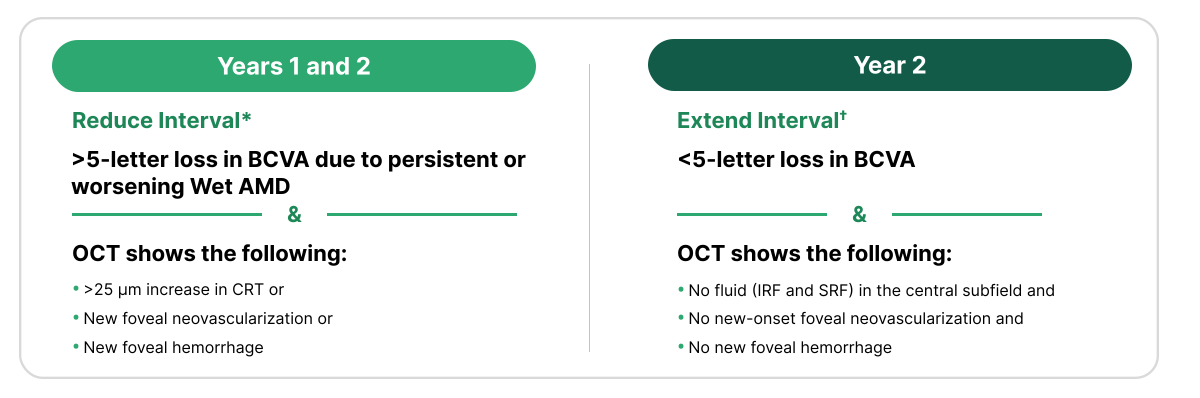
| * | Patients who met DRM criteria had dosing intervals shortened to Q8W at week 16 and week 20 or by 4-week increments from week 24. The minimum assigned dosing interval was Q8W.1,3 |
|---|---|
| † | Patients who met DRM criteria from week 52 through week 96 had dosing intervals extended by 4-week increments.1,3 |
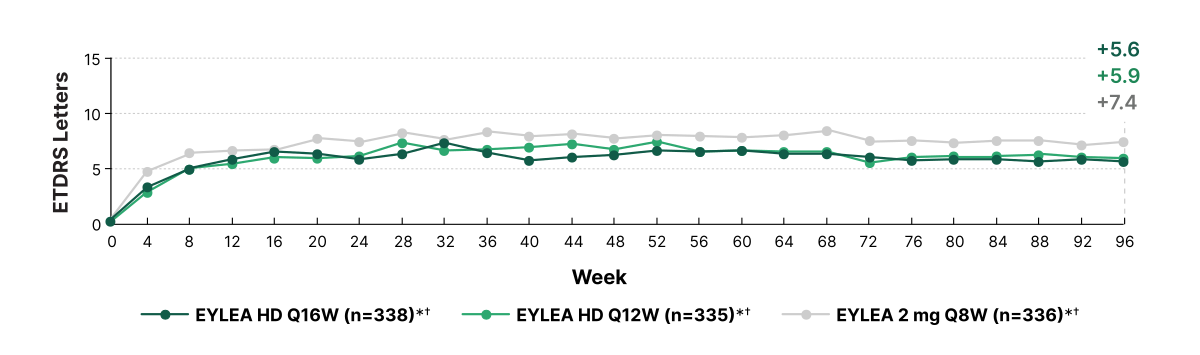
Mean Change in BCVA (ETDRS letters) From Baseline Through Week 96*
Primary Endpoint at Week 48
EYLEA HD met the primary endpoint of noninferiority vs EYLEA 2 mg at week 48. Both EYLEA HD treatments, Q16W and Q12W, were shown to be noninferior and clinically equivalent to EYLEA 2 mg Q8W with respect to the mean change in BCVA at week 48 using a prespecified noninferiority margin of 4 ETDRS letters. Mean change in BCVA at week 48 from baseline (ETDRS letters): EYLEA HD Q16W: +6.2; EYLEA HD Q12W: +6.7; EYLEA 2 mg Q8W: +7.6. Differences in LS means at week 48 were -1.1 (95% CI, -3.0, +0.7) and -1.0 (95% CI, -2.9, +0.9) for Q16W and Q12W vs EYLEA 2 mg, respectively.1
| * | Differences in LS means at week 96 for EYLEA HD were -1.1 (95% Cl, -2.9, +0.7) and -1.0 (95% Cl, -2.8, +0.8) for Q16W and Q12W vs EYLEA 2 mg, respectively. A noninferiority margin was not available for week 96. FAS; observed values (censoring data post ICE) at week 96: EYLEA HD Q16W (n=264), EYLEA HD Q12W (n=256), EYLEA 2 mg Q8W (n=243).1,3 |
|---|---|
| † | Following 3 initial monthly doses. FAS at baseline.1 |
| ‡ | Patients completing week 96 in the combined EYLEA HD group (n=583).3 |
| § | 6.2% of total EYLEA HD–treated patients who met protocol-defined criteria to be treated every 8 weeks did not maintain a response with every-8-weeks dosing after successful response to the 3 initial monthly doses (patients completing week 48).1,5 |
Proportion of Wet AMD Patients Without Retinal Fluid (IRF and SRF) in the Central Subfield at Week 16 (key secondary endpoint)2
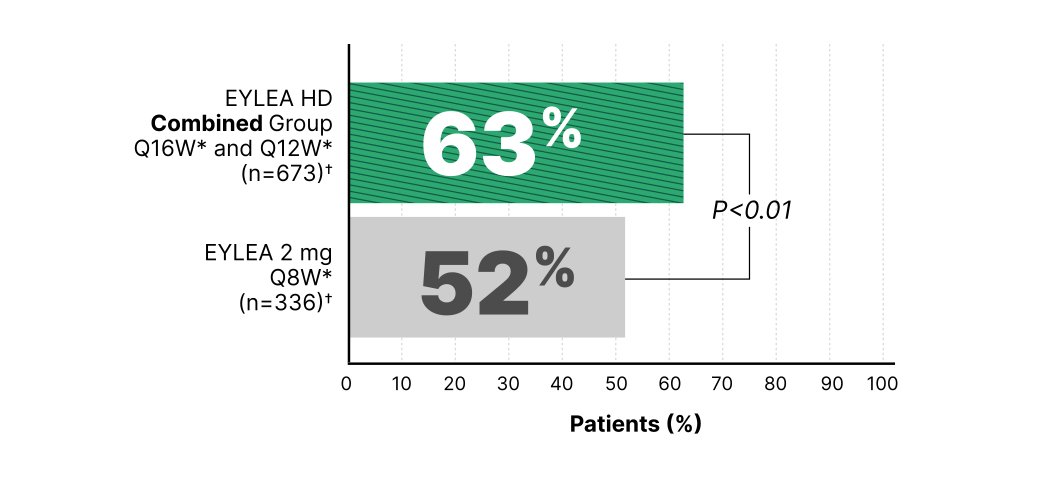
| * | Following 3 initial monthly doses.2 |
| † | Absence of retinal fluid was determined by a central reading center on OCT. FAS; last observation carried forward (censoring data post ICE).2 |
| ‡ | Week 16 was the only time point that allowed for a matched 8-week interval comparison between all 3 study arms.2 |
Mean Change in CRT From Baseline Through Week 96 (exploratory endpoint)*†
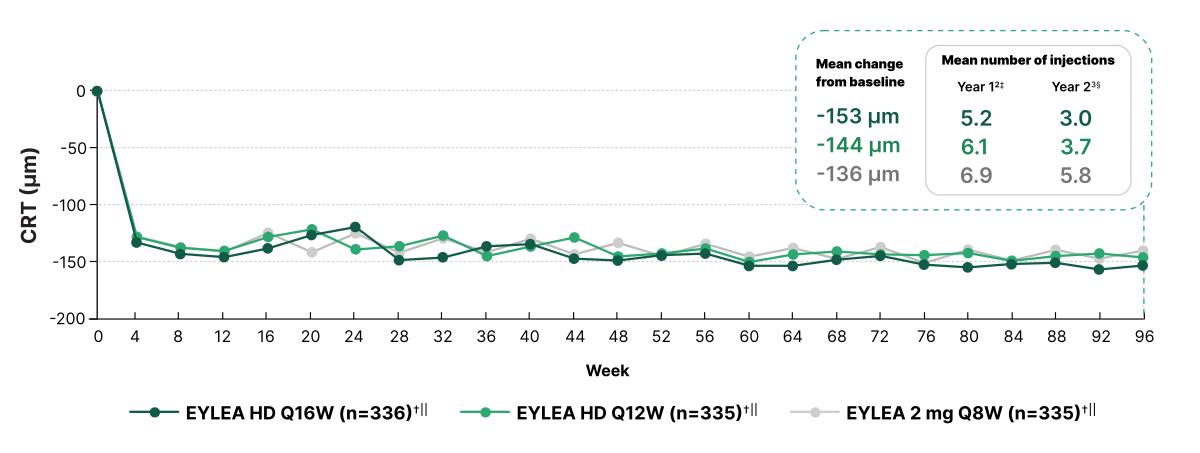
| * | Data limitations: This endpoint was analyzed descriptively only and not adjusted for multiplicity. Clinical significance has not been established and conclusions regarding treatment effect cannot be drawn. |
|---|
| † | Reductions in CRT were determined by a central reading center on OCT. FAS; observed values (censoring data post ICE) at week 96: EYLEA HD Q16W (n=257), EYLEA HD Q12W (n=250), EYLEA 2 mg Q8W (n=233).3,6 |
|---|---|
| ‡ | Mean number of injections in patients who completed week 48: EYLEA HD Q16W (n=312): 5.2, EYLEA HD Q12W (n=316): 6.1, EYLEA 2 mg Q8W (n=309): 6.9.2 |
| § | Mean number of injections from week 48 through year 2 in patients who completed week 96: EYLEA HD Q16W (n=292): 3.0, EYLEA HD Q12W (n=291): 3.7, EYLEA 2 mg Q8W (n=286): 5.8.3 |
| || | Following 3 initial monthly doses. FAS at baseline.1 |
Last Completed Dosing Interval at Week 963*†
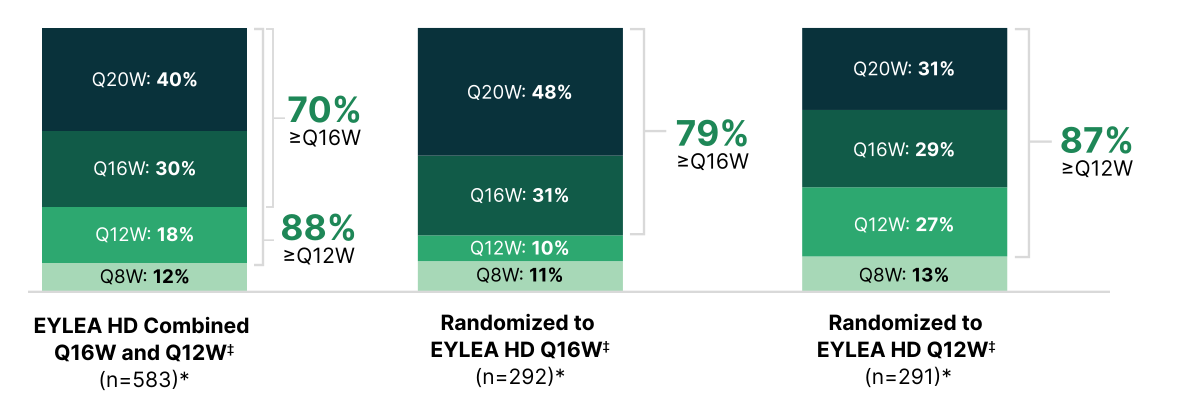
| * | In patients completing week 96.3 |
| † | 6.2% of total EYLEA HD–treated patients who met protocol-defined criteria to be treated every 8 weeks did not maintain a response with every-8-weeks dosing after successful response to the 3 initial monthly doses (patients completing week 48).1,5 |
| ‡ | Following 3 initial monthly doses.1 |
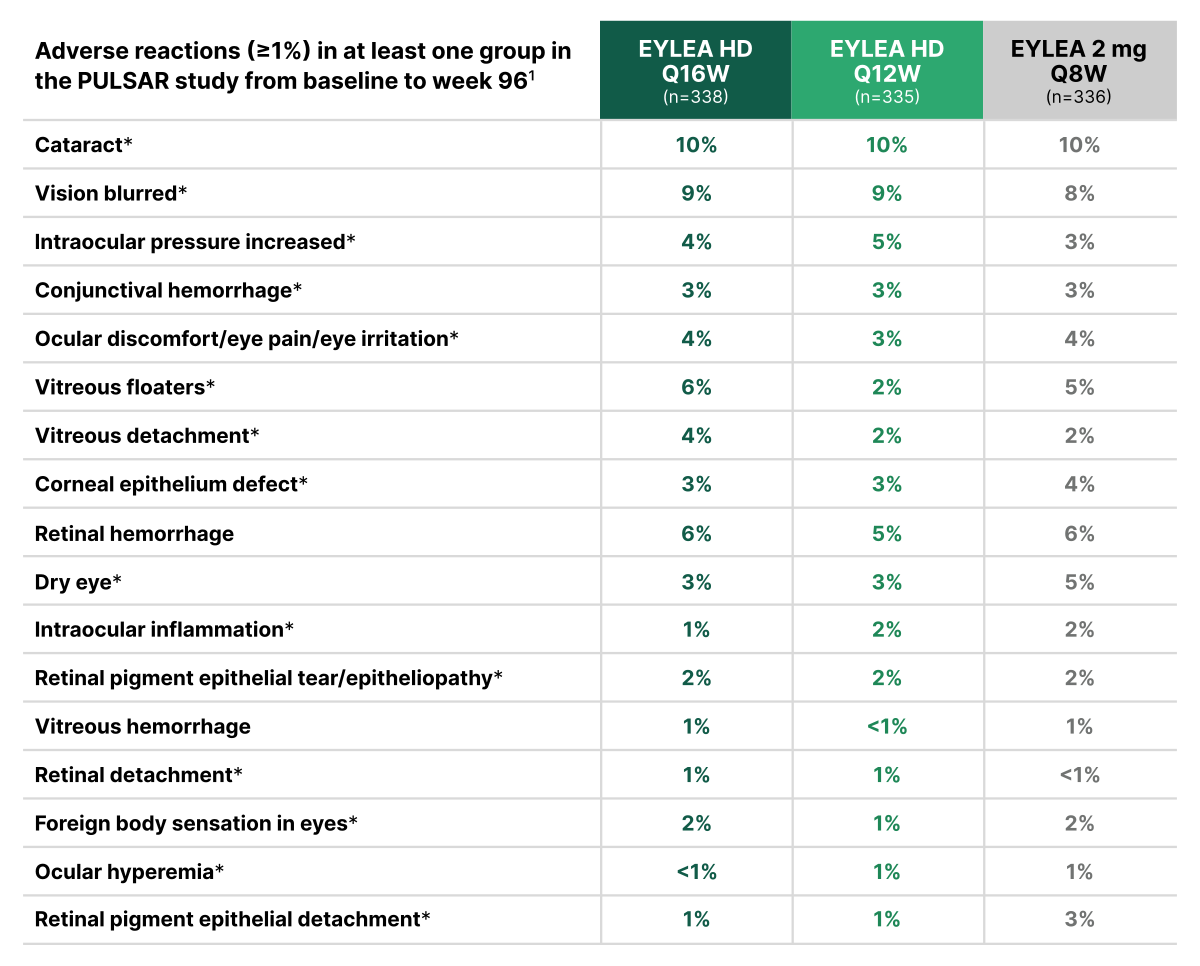
Adverse drug reactions (ADRs) reported in <1% of participants treated with EYLEA HD were lacrimation increased, eyelid edema, hypersensitivity (includes adverse events of rash, urticaria, pruritus), and injection site hemorrhage.1
| * | Represents grouping of related terms.1 |
|---|
