Intended for use by payers, formulary committees, or other similar entities for purposes of population-based drug
selection, coverage, and/or reimbursement decision making, pursuant to FD&C Act Section 502(a).
Prescribing Information

Wet AMD

PULSAR: A Head-to-Head Trial in Wet AMD

EYLEA HD Patients Were Immediately Extended Following 3 Initial Monthly Injections1,2

  • A multicenter, randomized, double-masked, phase 3, head-to-head clinical trial of EYLEA HD vs EYLEA® (aflibercept) Injection 2 mg in treatment-naïve patients with Wet AMD (N=1009)
  • Patients had a mean age of 74.5 years (range: 50-96) and a mean visual acuity of ≈60 ETDRS letters at baseline (range: 24-78)
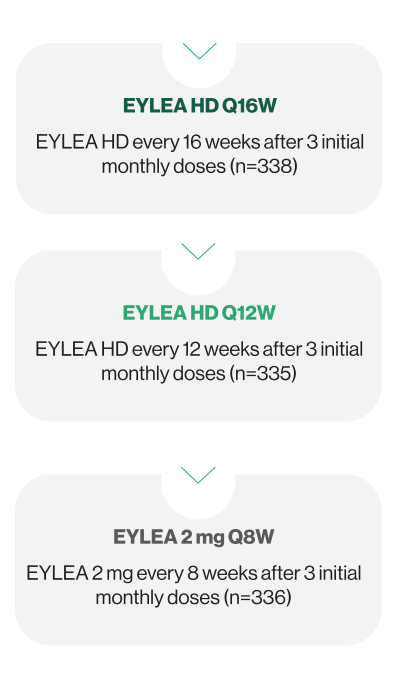
  • Patients were randomized in a 1:1:1 ratio into 1 of 3 treatment arms:
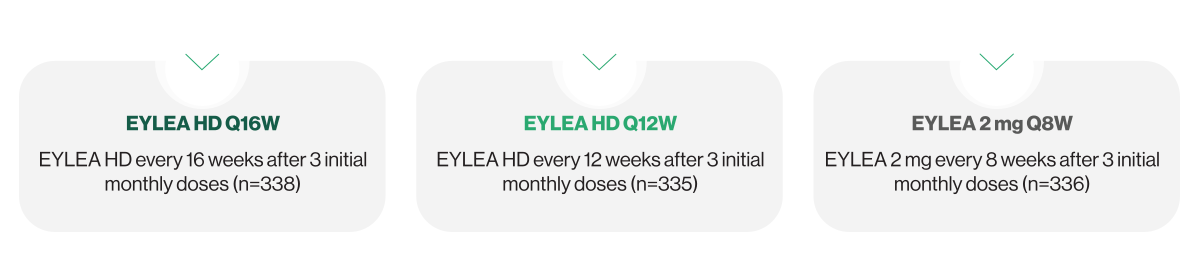
Wetamd 3treatments
Wetamd 3treatments mob
  • The primary endpoint was the mean change from baseline in BCVA at week 48 as measured by the ETDRS letter score
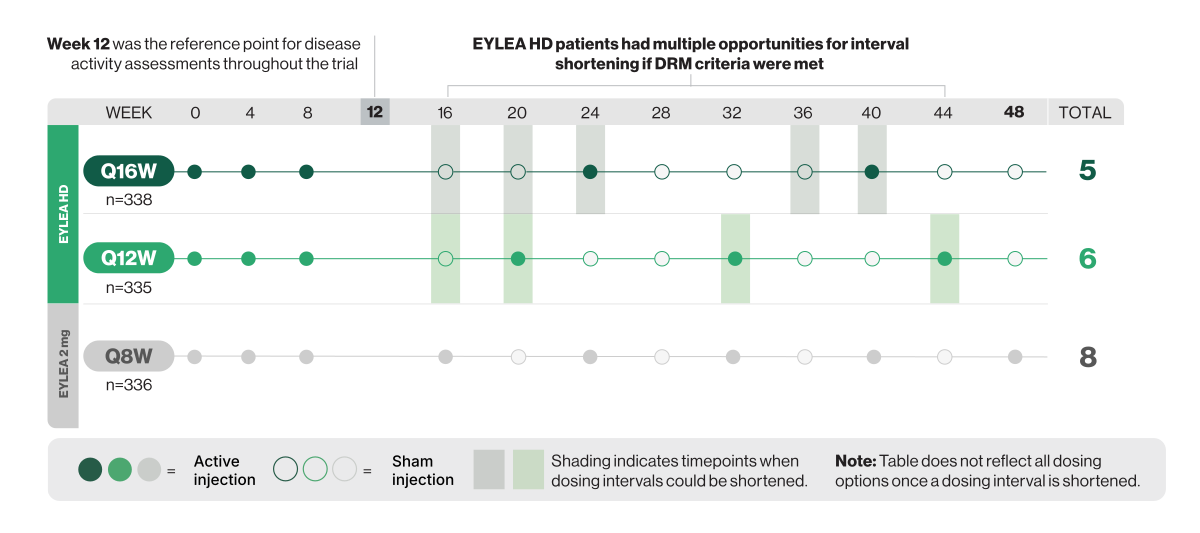
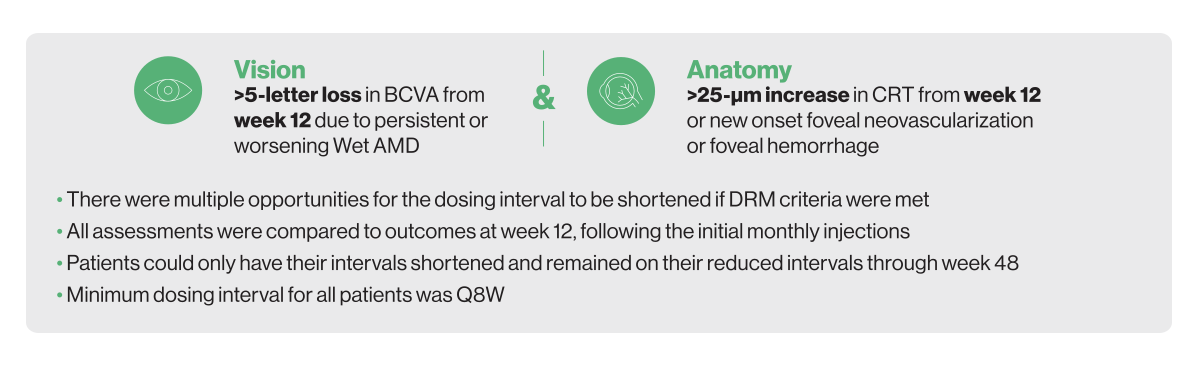
  • In the EYLEA HD groups, patients could be treated as frequently as every 8 weeks based on protocol-defined visual and anatomic criteria starting at week 16
Study Dosing Parameters

Planned Dosing Schedules Through Week 482

Thumbnail

Enlarged Image

Dose Regimen Modification (DRM) Criteria for Interval Shortening in the EYLEA HD Groups2
Thumbnail

Enlarged Image

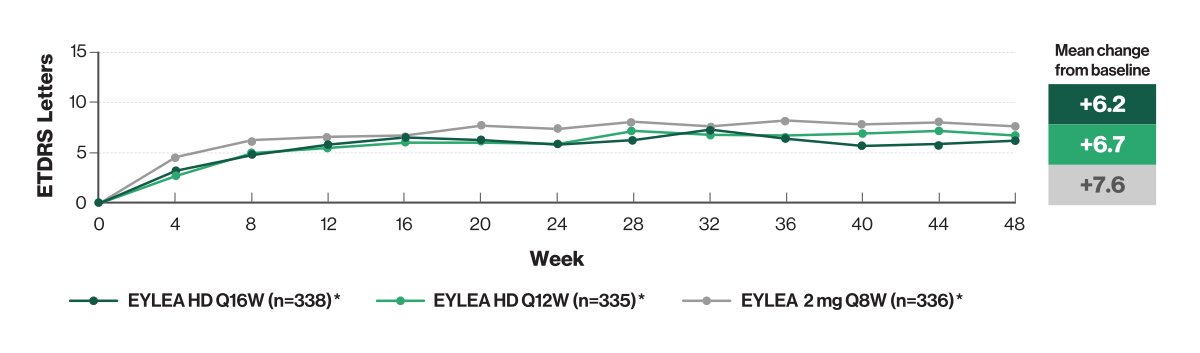
Rapid and Durable Vision Gains With EYLEA HD

Mean Change in BCVA (ETDRS letters) From Baseline Through Week 481,2*
Enlarged Image

EYLEA HD met the primary endpoint of noninferiority vs EYLEA at week 48. Both EYLEA HD treatments, Q16W and Q12W, were shown to be noninferior and clinically equivalent to EYLEA 2 mg Q8W with respect to the mean change in BCVA at week 48 using a prespecified noninferiority margin of 4 ETDRS letters. Differences in LS means at week 48 were -1.1 (95% CI, -3.0 to +0.7) and -1.0 (95% CI, -2.9 to +0.9) for Q16W and Q12W vs EYLEA 2 mg, respectively.1

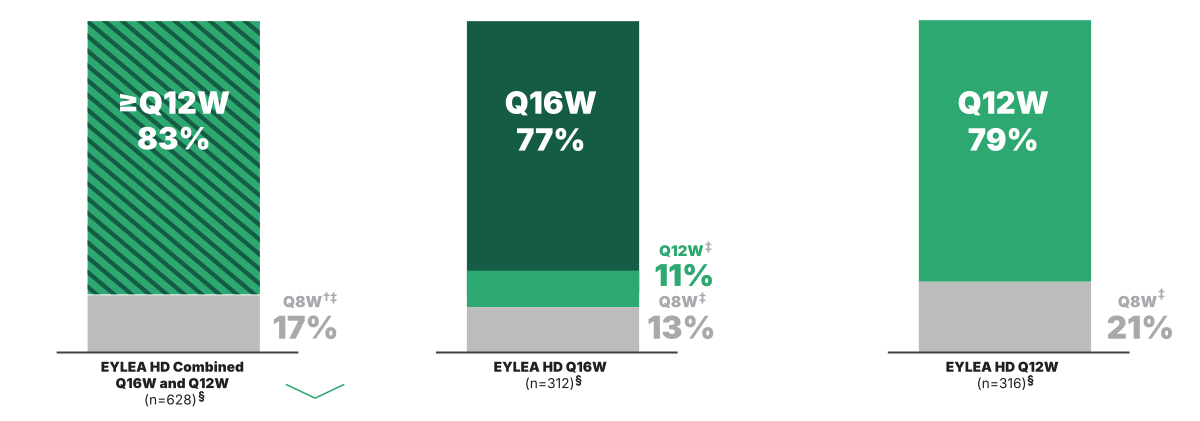
83% of all EYLEA HD patients successfully maintained intervals ≥Q12W through week 482†‡
* Following 3 initial monthly doses. FAS at baseline. FAS; observed values (censoring data post ICE) at week 48: EYLEA HD Q16W (n=289), EYLEA HD Q12W (n=299), EYLEA 2 mg Q8W (n=285).1,2
† Patients completing week 48 (n=628). Proportion of patients maintaining randomized dosing intervals ≥Q12W through week 48: EYLEA HD Q16W, 77% and EYLEA HD Q12W, 79%.2,3
‡ 6.2% of total EYLEA HD-treated patients who met protocol-defined criteria to be treated every 8 weeks did not maintain a response with every-8-weeks dosing after successful response to the 3 initial monthly doses.1
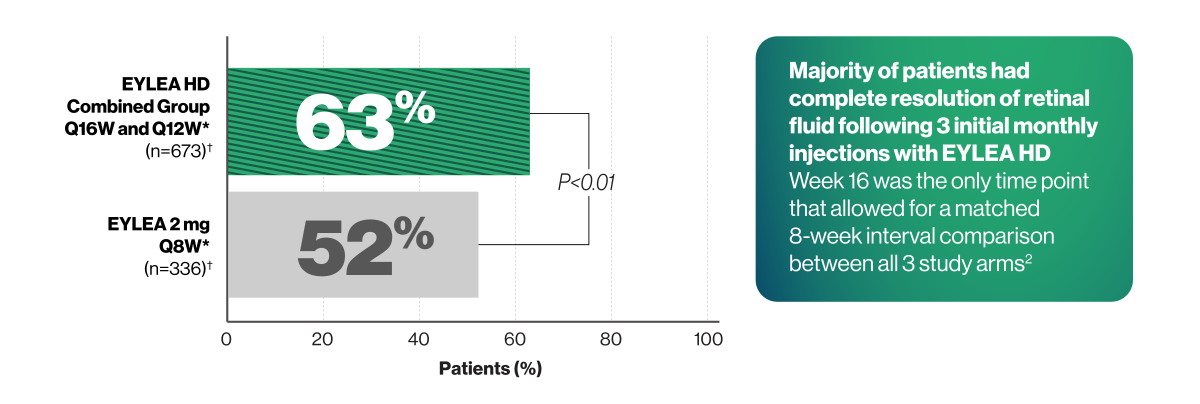
Rapid, Superior Retinal Drying With EYLEA HD vs EYLEA 2 mg

Proportion of Wet AMD Patients Without Retinal Fluid (IRF and SRF) in the Central Subfield at Week 16 (key secondary endpoint)2
Enlarged Image
* Following 3 initial monthly doses.2
† Absence of retinal fluid was determined by a central reading center on OCT. FAS; last observation carried forward (censoring data post ICE).2
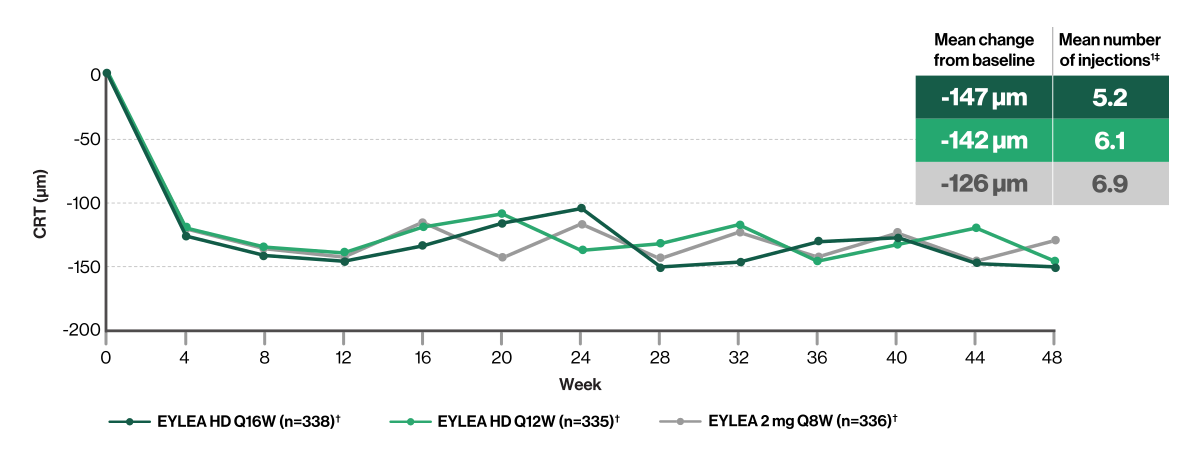
Rapid Reductions in CRT Maintained Through Week 48 With EYLEA HD

Mean Change in CRT From Baseline Through Week 48 (additional secondary endpoint)2,4*
Enlarged Image

* Data limitations: Mean change in CRT at week 48 was a prespecified additional secondary endpoint. This endpoint was analyzed descriptively only and not adjusted for multiplicity. Clinical significance has not been established and conclusions regarding treatment effect cannot be drawn.
† Following 3 initial monthly doses. Reductions in CRT were determined by a central reading center on OCT. FAS at baseline. FAS; observed values (censoring data post ICE) at week 48: EYLEA HD Q16W (n=282), EYLEA HD Q12W (n=289), EYLEA 2 mg Q8W (n=273).2,4
‡ Patients who completed week 48: EYLEA HD Q16W (n=312), EYLEA HD Q12W (n=316), EYLEA 2 mg Q8W (n=309).1
EYLEA HD Demonstrated Durability With Extended Dosing Intervals2,3

Proportion of Patients Maintaining Randomized Q16W and Q12W Dosing Intervals Through Week 482,3*†
Enlarged Image

In an exploratory analysis, eyes that were shortened to a Q8W dosing interval through week 48 were further evaluated to determine if the study-specified DRM criteria would have been hypothetically met for additional shortening to a Q4W dose interval5∥

6.2% of total EYLEA HD–treated patients who met protocol-defined criteria to be treated every 8 weeks did not maintain a response with every-8-weeks dosing after successful response to the 3 initial monthly doses1

∥ Data limitations: This endpoint was analyzed descriptively only and not adjusted for multiplicity. Clinical significance has not been established and conclusions regarding treatment effect cannot be drawn.
* Following 3 initial monthly doses.2
† 6.2% of total EYLEA HD-treated patients who met protocol-defined criteria to be treated every 8 weeks did not maintain a response with every-8-weeks dosing after successful response to the 3 initial monthly doses.1
‡ Patients who met DRM criteria for interval shortening.2
§ Patients completing week 48.2
Values do not total 100% due to rounding.
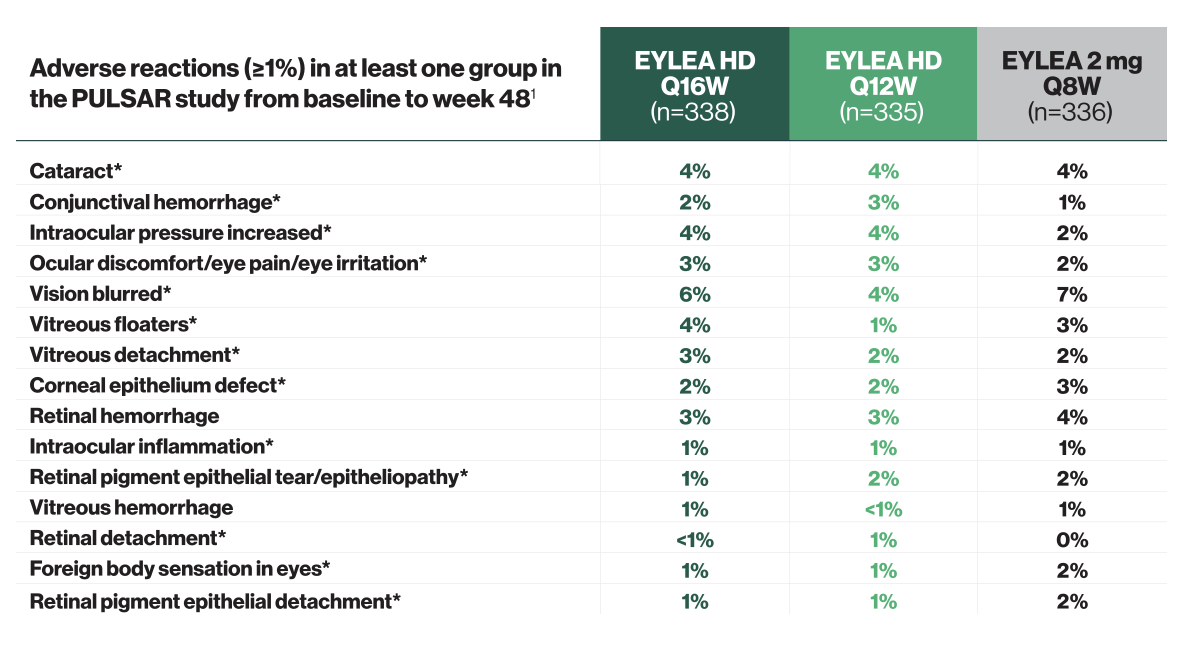
Demonstrated Safety Profile Consistent With EYLEA 2 mg1,6

Enlarged Image

Adverse drug reactions (ADRs) reported in <1% of participants treated with EYLEA HD were ocular hyperemia (includes adverse events of conjunctival hyperemia, conjunctival irritation, ocular hyperemia), lacrimation increased, eyelid edema, hypersensitivity (includes adverse events of rash, urticaria, pruritus), retinal tear, and injection site hemorrhage.1

* Represents grouping of related terms.

IMPORTANT SAFETY INFORMATION FOR EYLEA HD AND EYLEA

CONTRAINDICATIONS

  • EYLEA HD and EYLEA are contraindicated in patients with ocular or periocular infections, active intraocular inflammation, or known hypersensitivity to aflibercept or any of the excipients in EYLEA HD or EYLEA.

WARNINGS AND PRECAUTIONS

  • Intravitreal injections, including those with aflibercept, have been associated with endophthalmitis and retinal detachments and, more rarely, retinal vasculitis with or without occlusion. Proper aseptic injection technique must always be used when administering EYLEA HD or EYLEA. Patients and/or caregivers should be instructed to report any signs and/or symptoms suggestive of endophthalmitis, retinal detachment, or retinal vasculitis without delay and should be managed appropriately.
  • Acute increases in intraocular pressure (IOP) have been seen within 60 minutes of intravitreal injection, including with EYLEA HD and EYLEA. Sustained increases in IOP have also been reported after repeated intravitreal dosing with VEGF inhibitors. IOP and the perfusion of the optic nerve head should be monitored and managed appropriately.
  • There is a potential risk of arterial thromboembolic events (ATEs) following intravitreal use of VEGF inhibitors, including EYLEA HD and EYLEA. ATEs are defined as nonfatal stroke, nonfatal myocardial infarction, or vascular death (including deaths of unknown cause).
    • EYLEA HD: The incidence of reported ATEs in the Wet AMD study from baseline through week 48 was 0.4% (3 out of 673) in the combined group of patients treated with EYLEA HD compared with 1.5% (5 out of 336) in patients treated with EYLEA 2 mg. The incidence in the DME study from baseline to week 48 was 3.1% (15 out of 491) in the combined group of patients treated with EYLEA HD compared with 3.6% (6 out of 167) in patients treated with EYLEA 2 mg. The incidence in the RVO study from baseline to week 36 was 0.5% (3 out of 591) in the combined group of patients treated with EYLEA HD compared with 1.7% (5 out of 301) in patients treated with EYLEA 2 mg.
    • EYLEA: The incidence of reported ATEs in Wet AMD studies during the first year was 1.8% (32 out of 1824) in the combined group of patients treated with EYLEA compared with 1.5% (9 out of 595) in patients treated with ranibizumab; through 96 weeks, the incidence was 3.3% (60 out of 1824) in the EYLEA group compared with 3.2% (19 out of 595) in the ranibizumab group. The incidence in the DME studies from baseline to week 52 was 3.3% (19 out of 578) in the combined group of patients treated with EYLEA compared with 2.8% (8 out of 287) in the control group; from baseline to week 100, the incidence was 6.4% (37 out of 578) in the combined group of patients treated with EYLEA compared with 4.2% (12 out of 287) in the control group. There were no reported thromboembolic events in the patients treated with EYLEA in the first six months of the RVO studies.

ADVERSE REACTIONS

  • EYLEA HD: The most common adverse reactions (≥3%) reported in patients receiving EYLEA HD were cataract, conjunctival hemorrhage, corneal epithelium defect, intraocular pressure increased, ocular discomfort/eye pain/eye irritation, retinal hemorrhage, vision blurred, vitreous detachment, and vitreous floaters.
  • EYLEA: Serious adverse reactions related to the injection procedure have occurred in <0.1% of intravitreal injections with EYLEA including endophthalmitis and retinal detachment. The most common adverse reactions (≥5%) reported in patients receiving EYLEA were conjunctival hemorrhage, eye pain, cataract, vitreous detachment, vitreous floaters, and intraocular pressure increased.
  • Patients may experience temporary visual disturbances after an intravitreal injection with EYLEA HD or EYLEA and the associated eye examinations. Advise patients not to drive or use machinery until visual function has recovered sufficiently.

INDICATIONS

EYLEA HD® (aflibercept) Injection 8 mg and EYLEA® (aflibercept) Injection 2 mg are indicated for the treatment of patients with Neovascular (Wet) Age-Related Macular Degeneration (AMD), Diabetic Macular Edema (DME), Diabetic Retinopathy (DR), and Macular Edema following Retinal Vein Occlusion (RVO).

Please click here for full Prescribing Information for EYLEA HD and EYLEA.

AMD = age-related macular degeneration; BCVA = best corrected visual acuity; CRT = central retinal thickness; ETDRS = Early Treatment Diabetic Retinopathy Study; FAS = full analysis set; ICE = intercurrent events; IRF = intraretinal fluid; LS = least squares; OCT = optical coherence tomography; Q4W = every 4 weeks; Q8W = every 8 weeks; Q12W = every 12 weeks; Q16W = every 16 weeks; SRF = subretinal fluid.

References: 1. EYLEA HD full U.S. Prescribing Information. Regeneron Pharmaceuticals, Inc. November 2025. 2. Lanzetta P, Korobelnik J-F, Heier JS, et al; PULSAR Investigators. Intravitreal aflibercept 8 mg in neovascular age-related macular degeneration (PULSAR): 48-week results from a randomised, double-masked, non-inferiority, phase 3 trial. Lancet. 2024;403(10432):1141-1152. 3. Brown DM; PULSAR Study Investigators. Presented at: Angiogenesis, Exudation, and Degeneration 2023; February 11, 2023; virtual. 4. Data on file. Regeneron Pharmaceuticals, Inc. 5. Fein J; PULSAR Study Investigators. Presented at: Retina World Congress 2024; May 9-12, 2024. 6. EYLEA full U.S. Prescribing Information. Regeneron Pharmaceuticals, Inc. October 2024.

11/2025
US.EHD.25.07.0255

Welcome to the Market Access Website for EYLEA HD